Electric Vehicles and Renewable Energy: America's Charging Revolution
Genultimus Policy Team
Genultimus
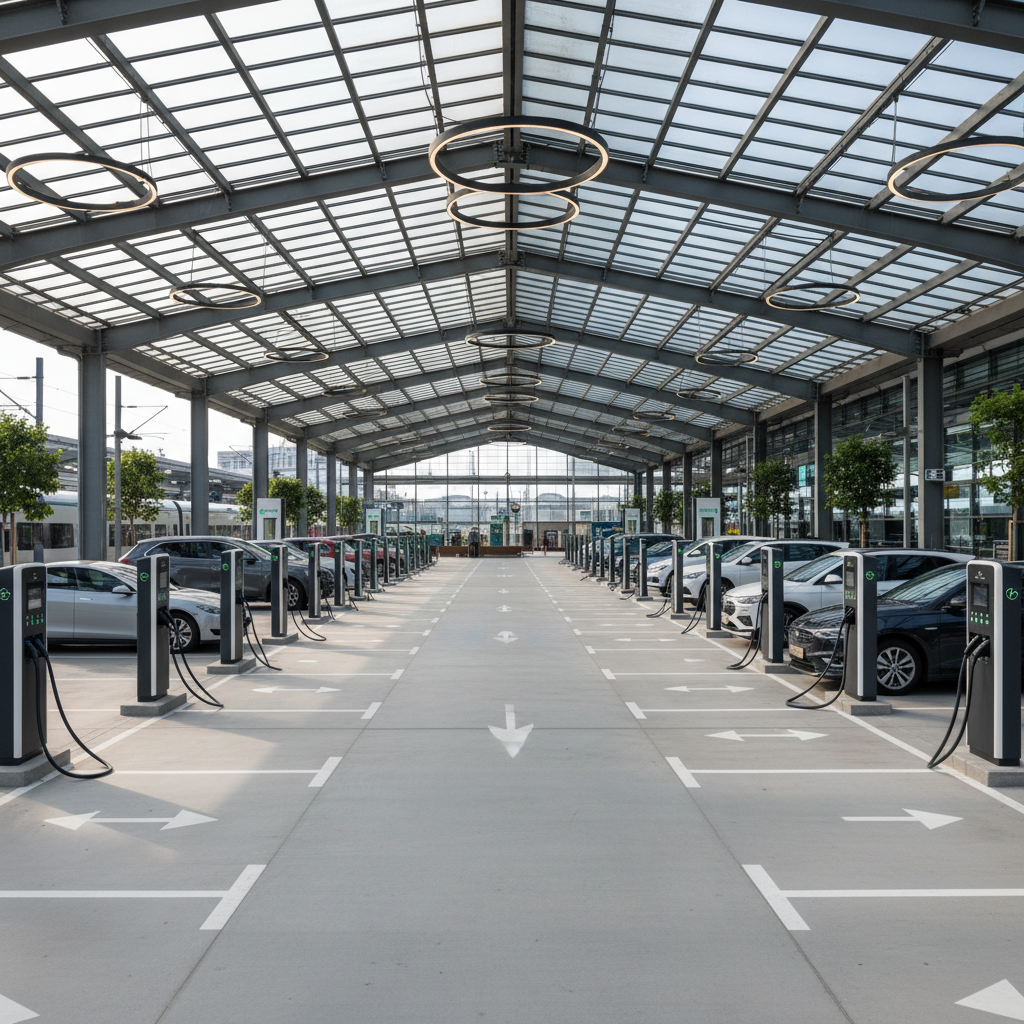
The United States electric vehicle (EV) market reached a significant milestone in 2019, with cumulative EV sales surpassing 1 million vehicles — a threshold that analysts had long viewed as a marker of mainstream adoption. According to the Edison Electric Institute (EEI), the U.S. had approximately 1.18 million plug-in electric vehicles on the road by the end of 2019.
EV Sales Growth
The U.S. EV market grew rapidly through the late 2010s:
- 2017: ~200,000 new EV sales (plug-in hybrid and battery electric combined)
- 2018: ~361,000 new EV sales — an 81% increase over 2017
- 2019: ~329,000 new EV sales — a slight decline due to the phase-out of federal tax credits for Tesla and GM
The federal EV tax credit under Section 30D of the Internal Revenue Code provided up to $7,500 per vehicle for qualifying purchases. However, the credit began phasing out for manufacturers that had sold more than 200,000 qualifying vehicles — Tesla reached this threshold in Q3 2018, and General Motors in Q4 2018.
The Charging Network
A robust charging infrastructure is essential for EV adoption. As of early 2020, the U.S. had approximately 26,000 public charging stations with more than 83,000 charging outlets, according to the U.S. Department of Energy's Alternative Fuels Station Locator.
Key charging networks in the U.S.:
- Tesla Supercharger: ~1,600 stations with ~14,000 stalls (Tesla vehicles only)
- ChargePoint: The largest open network, with over 114,000 charging spots globally
- EVgo: ~800 fast-charging stations across 34 states
- Electrify America: Launched in 2018 as part of Volkswagen's emissions settlement, with a commitment to invest $2 billion in U.S. EV infrastructure over 10 years
The Renewable Energy Connection
When charged with renewable electricity, EVs produce zero tailpipe emissions and dramatically lower lifecycle carbon emissions compared to gasoline vehicles. The Union of Concerned Scientists calculated that in 2019, driving an average EV in the U.S. was equivalent to a gasoline car achieving 80 miles per gallon — and this figure improves as the grid gets cleaner.
Several U.S. utilities launched time-of-use (TOU) rates specifically for EV owners, incentivising overnight charging when grid demand is low and renewable generation (particularly wind) is often highest. Pacific Gas & Electric (PG&E) in California, for example, offered EV rates as low as $0.12 per kWh during off-peak hours in 2019.
State Leadership
California remained the dominant U.S. EV market, accounting for approximately 47% of all U.S. EV sales in 2019, according to the California Air Resources Board (CARB). The state's Zero Emission Vehicle (ZEV) mandate — which requires automakers to sell a minimum percentage of zero-emission vehicles — has been adopted by 13 other states, collectively representing about 35% of the U.S. auto market.
The convergence of falling battery costs, expanding charging infrastructure, and supportive state policies positioned the U.S. EV market for continued growth into the 2020s.